Five Korean favourites that will help you read any label
3 min read
You are in a beauty shop, you pick up a Korean cream and you turn it over. Among all those long names, a few familiar ones keep appearing. Learn these five and you will understand a good part of what is on the shelf. Let us introduce them one by one.
Centella asiatica: the calming one
This small plant grows in damp parts of Asia. Many products call it cica, and the word has become almost a synonym for calm skin.
You will mostly find it in creams and serums for sensitive or easily flushed skin. On the label it appears as Centella Asiatica Extract, or through its compounds, such as madecassoside. If your skin often complains, this name deserves your attention.
Ginseng: the timeless classic
No plant says Korea quite like this one. Korean ginseng has been part of traditional medicine and cooking there for centuries, and its red form is made by steaming and drying the root.
In skincare it mostly appears in creams and essences for mature skin, with the aim of giving a livelier, more rested look. These products often feel rich and have a scent of their own. If you love a traditional cream, you may well enjoy it.
Snail mucin: the talking point
This is the ingredient that surprises people the first time. It is a natural snail secretion, filtered and purified for cosmetic use. It gives a slightly stretchy texture and very pleasant hydration.
On the label it reads Snail Secretion Filtrate. Vegans and people with a mollusc allergy tend to avoid it. For others, it can be a good friend to dehydrated skin that wants comfort and suppleness.
Rice: an old washing ritual
Rice is the base of the Korean table, and it has a place at the dressing table too. Washing the face with rice water is an old custom in several Asian countries.
Today you will see it as an extract, as rice water or in fermented form. Its appeal is simple: softness and skin that looks more even. Look for Oryza Sativa on the list, its scientific name. It is a gentle choice and an easy place to start.
Niacinamide: the modern one
This one is neither a plant nor Korean in origin. It is a form of vitamin B3, and Korean skincare has embraced it warmly. It is valued for being versatile: it helps support the skin barrier and is used to improve the look of dark spots and pores.
It is generally well tolerated, although some sensitive skins go a little red at high concentrations. If that happens to you, choose a lower one.
How to choose without getting confused
Ingredients are listed from most to least, apart from those present in very small amounts. If your favourite sits at the very end, there is not much of it.
One more tip: more famous names do not make a better product. Choose according to what you need, and always try something new on a small area before using it on your whole face.
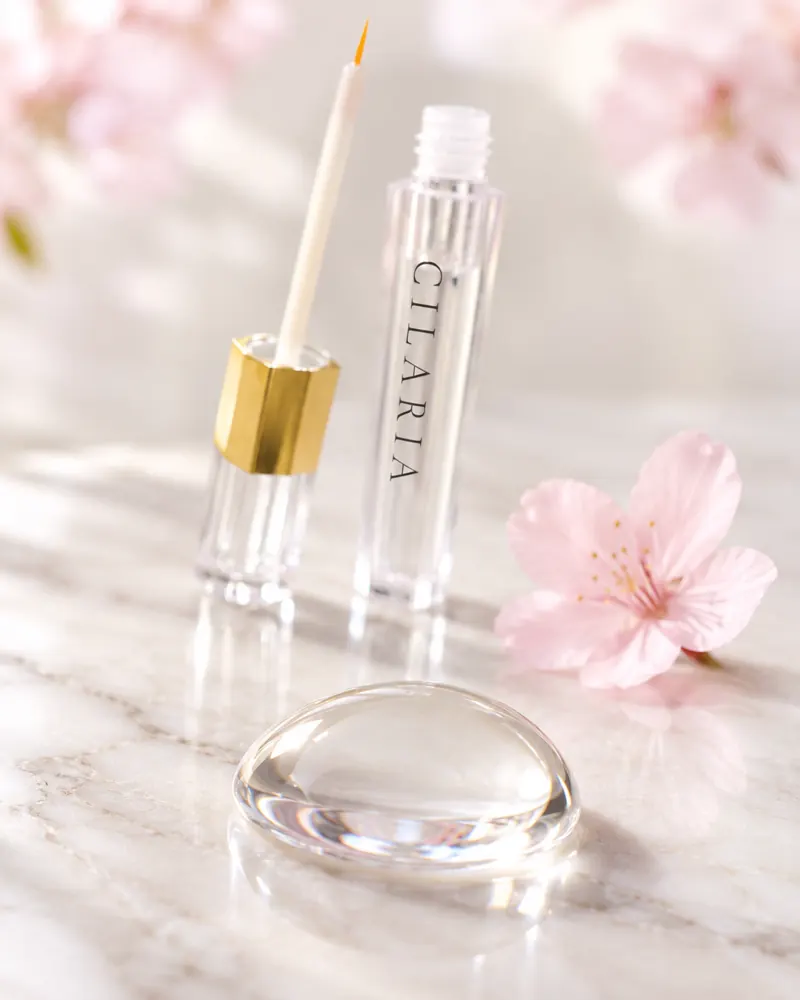
This reading habit works for every product, including those for small areas. The list on CILARIA, for example, is short and easy to check: water, peptides, biotin, glycerin, panthenol and allantoin, among others. None of the five famous names above is in it, because it was made for a different job. Each product has its task, and now you can read it.