When a label says peptide, this is what you are reading
3 min read
What is a peptide? People ask this more and more in beauty shops, usually quietly and with a box in their hand. The word sounds like difficult science. The answer fits into one simple picture.
A very short string of beads
Think of a necklace. Each bead is an amino acid, a small building block the body uses for many of its structures. String together a great many beads and you get a protein, such as collagen or keratin. String together just a few and you have a peptide.
That is why peptide names often tell you their size. A tripeptide has three amino acids. A pentapeptide has five. The number that follows is a kind of code to tell them apart, like a surname within a family.
Why skincare is interested
One reason is practical: a whole protein is too big to be a convenient active in many cosmetics. Peptides are short, so formulators find them easier to work with.
There is also a broader idea. Skin and hair rely on proteins, so laboratories look for small pieces related to them. There are many types of peptides, and each formula chooses them for a different purpose: conditioning, smoothing or improving how skin and hair look.
Here it pays to be honest. A cosmetic cares for you and improves appearance. It is not a medicine, and you should not believe anyone promising radical or guaranteed change. Everyone responds differently, and habits matter too.
Why you see them so often in Korea
Korean beauty built its reputation by mixing tradition with the laboratory, and peptides fit well with that love of carefully formulated ingredients. Korean shoppers read lists closely and ask questions. The light textures so typical there, such as essences and serums, also suit this type of ingredient.
So today you will find peptides in eye creams, face serums, hair products and treatments for small areas.
How to spot them on the label
The ingredient list is written in English or Latin, following an international system called INCI. Look for the word peptide. It may come with a prefix and a number. Two examples:
- Tripeptide-1: a peptide of three amino acids.
- Myristoyl Pentapeptide-4: a peptide of five amino acids joined to a fatty acid, myristic acid, a common way of making it get along better with skin and hair.
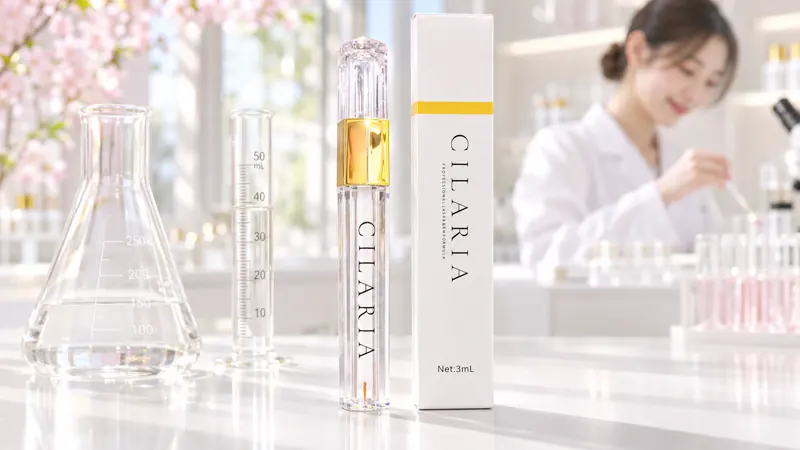
Both names appear, for example, on the list for CILARIA, our lash and brow serum developed and designed by a Korean laboratory. They come with biotin, also known as vitamin B7, panthenol, glycerin and allantoin. And it contains no prostaglandins, parabens or fragrance.
Three questions before you buy
- What else is in it? A peptide does not work alone. The whole formula matters, including anything that disagrees with you.
- Where does it go? A face product is not the same as one for the eye area. Use each where the pack says.
- Will I keep it up? This kind of care is designed for daily use. If you know you will not use it, better not to buy it.
That is all. Next time you see the word on a box, you will know it means a very short string of amino acids. If someone offers you miracles, smile and keep reading the list. You know how now.