Your grandmother and Korean hanbang would have got along very well
3 min read
When you were little, someone in your family probably had a remedy for everything. Chamomile for tired eyes, honey for a sore throat, a herbal tea to help you sleep. Nearly every culture has this trust in plants. In Korea it has its own name and a long written history: hanbang.
One word, one way of seeing the body
Hanbang refers to traditional Korean medicine. It begins with an idea that may sound familiar: the body works as a whole, and its balance shows on the outside. In this way of thinking, skin is not looked at on its own. It is linked to rest, food and mood.
Hanbang shares roots with other East Asian traditions but followed its own path. Its great reference work is the Donguibogam, a medical book written by Heo Jun, a court physician during the Joseon dynasty. Koreans hold it in great affection, and its author has even been the hero of television series.
Traditional medicine is still part of Korean life today. There are dedicated clinics, and many families keep up the habit of herbal tonics. That is why hanbang does not feel like a museum piece.
The plants on the dressing table
When hanbang moves into skincare, the bowl of herbs gives way to the laboratory, but the raw materials stay recognisable. Here are a few you will often see:
- Ginseng. The country's most famous root, also in its red form.
- Korean angelica (danggwi). An aromatic root found in many traditional recipes.
- Liquorice. Often used in products for sensitive skin.
- Peony. A flower prized for its beauty and for its root.
These plants are often combined rather than used alone. That is one of the marks of hanbang: a formula is imagined as a balanced blend. Some brands also use fermentation, a technique closely tied to Korean cooking, as anyone who has tasted kimchi will know.
How a hanbang cream feels
People trying this family of products usually notice two things. One is the scent, herbal and a little earthy, like an old apothecary. Some adore it and some do not. The other is the texture, often rich and comforting, which is lovely on dry or mature skin.
One thing to keep in mind: natural does not mean suitable for everyone. Plants can cause reactions too. If your skin is delicate, test a small area first. And do not ask a cosmetic to do the work of medical treatment. If you have a skin problem, see your dermatologist.
What this tradition leaves us
You may never buy a cream with angelica root. Even so, hanbang offers a useful lesson: looking after yourself is an everyday task that includes sleeping well, eating well and being patient with yourself.
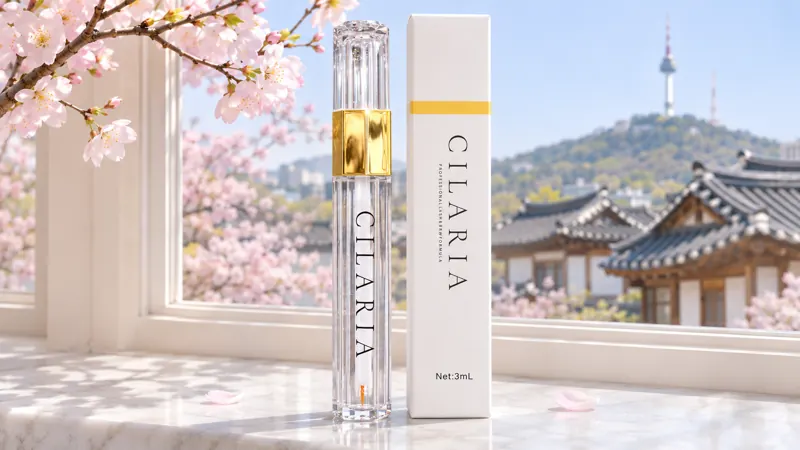
Modern Korean beauty moves between this heritage and modern science. CILARIA stands on the science side, with peptides and biotin, developed and designed by a Korean laboratory and with no herbal extracts on its list. It still shares hanbang's belief in steady habits, with its small appointment every morning and night.
Your grandmother and her chamomile would have understood straight away.